top of page
Chang Ming Shen
No Collections Here
Sort your projects into collections. Click on "Manage Collections" to get started
The Twelve Hexagrams Series
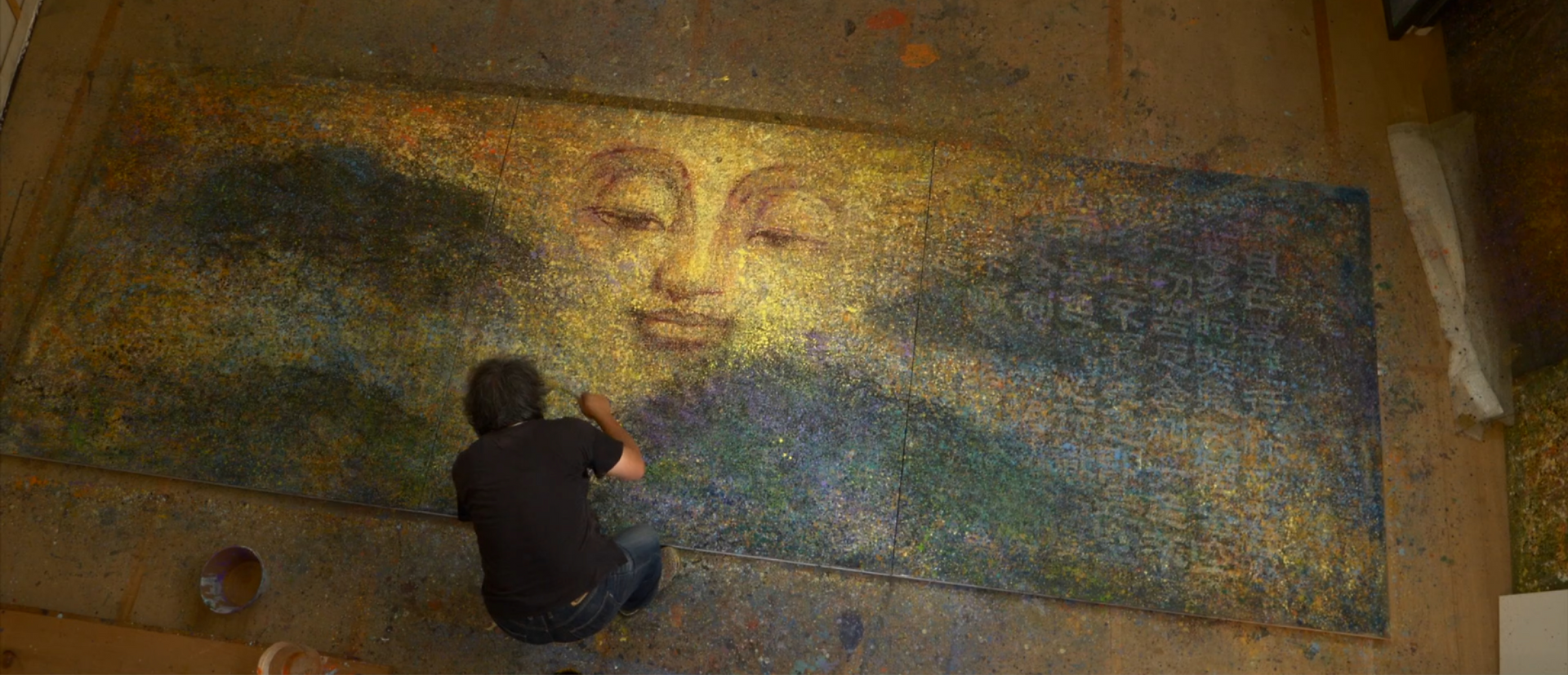
The Twelve Hexagrams series is based on the traditional Chinese 24 solar terms, which divide the year into four groups—spring, summer, autumn, and winter. Each group corresponds to three months and six solar terms, integrating the hexagram imagery from the I Ching to convey the cyclical ebb and flow of yin and yang. The red sun, following the progression of the seasons, transforms into gold or silver to symbolize the blooming, restraint, and renewal of energy. Thus, the series reflects the cycle of growth across Heaven and Earth.


The Twelve Hexagrams – Spring – November to January | 2023–2025
This series focuses on the six solar terms spanning from November to January—Major Snow (大雪), Winter Solstice (冬至), Minor Cold (小寒), Major Cold (大寒), Beginning of Spring (立春), and Rain Water (雨水)—aligned with the hexagram images of The Turning Point (Dì Léi Fù), Earth over Lake (Dì Zé Lín), and Earth over Heaven (Dì Tiān Tài). These embody the cyclical ebb and flow of yin and yang. In each work, the red sun serves as the foundation, beneath which layers of golden strokes are gradually applied, symbolizing the progressive resurgence of yang energy.
The hexagram images are each rendered with three distinct styles of inscription, symbolizing the simultaneity of three temporal-spatial realms and the philosophy of three creating all. As the hexagrams progress, the imagery shifts from harsh winter towards the awakening of spring, illustrating the cyclical flow of the energies of Heaven and Earth.
This series embodies the energies of concealment and revival, encompassing the power of renewal and germination as winter turns to spring.
______
The Twelve Hexagrams Series|2023–2025
The Twelve Hexagrams series is based on the traditional Chinese 24 solar terms, which divide the year into four groups—spring, summer, autumn, and winter. Each group corresponds to three months and six solar terms, integrating the hexagram imagery from the I Ching to convey the cyclical ebb and flow of yin and yang. The red sun, following the progression of the seasons, transforms into gold or silver to symbolize the blooming, restraint, and renewal of energy. Thus, the series reflects the cycle of growth across Heaven and Earth.


The Twelve Hexagrams – Summer – February to April|2023–2025
This series focuses on the six solar terms from February to April—Waking of Insects (驚蟄), Spring Equinox (春分), Pure Brightness (清明), Grain Rain (穀雨), Beginning of Summer (立夏), and Lesser Fullness (小滿)—which are combined with the hexagram images of Thunder over Heaven (Léi Tiān Dà Zhuàng), Lake over Heaven (Zé Tiān Guài), and Heaven (Qián Guà) to portray the gradual accumulation of yang energy reaching its peak. In the composition, the gold beneath the red sun gradually increases as the hexagrams advance, culminating in the fully golden sun at the Heaven (Qián Guà) hexagram. This golden sun symbolizes the pure yang power and the most intense heat and kinetic energy between Heaven and Earth.
______
The Twelve Hexagrams Series|2023–2025
The Twelve Hexagrams series is based on the traditional Chinese 24 solar terms, which divide the year into four groups—spring, summer, autumn, and winter. Each group corresponds to three months and six solar terms, integrating the hexagram imagery from the I Ching to convey the cyclical ebb and flow of yin and yang. The red sun, following the progression of the seasons, transforms into gold or silver to symbolize the blooming, restraint, and renewal of energy. Thus, the series reflects the cycle of growth across Heaven and Earth.
This series depicts the vibrant surge and flourishing vitality at the transition between spring and summer, with layered and vivid colors, reflecting the natural world's peak during this season. The artwork conveys the zenith of energy, a life force brimming with yang energy, and boundless potential.


The Twelve Hexagrams – Autumn – May to July|2023–2025
This series focuses on the six solar terms from May to July—Grain in Ear (芒種), Summer Solstice (夏至), Slight Heat (小暑), Great Heat (大暑), Autumn Begins (立秋), and Limit of Heat (處暑)—and utilizes the hexagram images Heaven over Wind (Tiān Fēng Gòu), Heaven over Mountain (Tiān Shān Dùn), and Heaven over Earth (Tiān Dì Pǐ) to represent the transformation and succession of natural energies. Beneath the red sun, the layers of silver gradually increase, symbolizing the transition from midsummer to early autumn, during which yang energy gradually diminishes while yin energy increases.
The composition of the painting conveys the tension inherent in the shift in the seasons from abundance to decline: from the bustling agricultural periods of Grain in Ear and the Summer Solstice, through the peak heat of Minor Heat and Major Heat, and onwards to the Beginning of Autumn and Limit of Heat.
This phase represents the afterglow of peak energy and the turning point in the ebb and flow of yin and yang, emphasizing the importance of introverted wisdom. It reminds us that we must learn to regulate our pace and be introspective while simultaneously accumulating strength and cultivating the wisdom of dynamic balance in life.
______
The Twelve Hexagrams Series|2023–2025
The Twelve Hexagrams series is based on the traditional Chinese 24 solar terms, which divide the year into four groups—spring, summer, autumn, and winter. Each group corresponds to three months and six solar terms, integrating the hexagram imagery from the I Ching to convey the cyclical ebb and flow of yin and yang. The red sun, following the progression of the seasons, transforms into gold or silver to symbolize the blooming, restraint, and renewal of energy. Thus, the series reflects the cycle of growth across Heaven and Earth.


The Twelve Hexagrams – Winter – August to October|2023–2025
This series focuses on the six solar terms from August to October—White Dew (白露), Autumn Equinox (秋分), Cold Dew (寒露), Frost Descent (霜降), Winter Begins (立冬), and Light Snow (小雪)—and corresponds to the hexagram images of Wind over Earth (Fēng Dì Guān), Mountain over Earth (Shān Dì Bō), and Earth (Kūn Guà). The red sun gradually becomes veiled in silver, ultimately transforming into a complete silver full moon to symbolize the peak of yin energy.
The layering of the work reveals a progression from the autumn harvest to the depths of winter: the coolness of White Dew, the equilibrium of Autumn Equinox, followed by the crystallizing chill of Cold Dew and Frost Descent, culminating in the Concealment of Beginning of Winter and Light Snow. The transformation of hexagram images corresponds to the profound energies of Heaven and Earth, symbolizing the pivotal moment when yin reaches its extreme and gives rise to yang.
This series conveys the tranquility and calm of winter, depicting the wisdom of “concealment” and “gestation” and heralding the beginning of a new cycle.
______
The Twelve Hexagrams Series|2023–2025
The Twelve Hexagrams series is based on the traditional Chinese 24 solar terms, which divide the year into four groups—spring, summer, autumn, and winter. Each group corresponds to three months and six solar terms, integrating the hexagram imagery from the I Ching to convey the cyclical ebb and flow of yin and yang. The red sun, following the progression of the seasons, transforms into gold or silver to symbolize the blooming, restraint, and renewal of energy. Thus, the series reflects the cycle of growth across Heaven and Earth.
bottom of page